
A pricing manager starts Monday with a familiar problem. A competitor has changed prices overnight, several resellers may be advertising below policy, and sales is asking for discount guidance on deals that don't fit the standard price list. The team has the data somewhere, usually across spreadsheets, email threads, ERP exports, and marketplace checks, but not in one workflow that turns evidence into a defensible decision.
That gap explains why B2B pricing software has become more than a tool for publishing price lists. The category now supports competitor intelligence, price monitoring, price optimization, quote governance, approvals, and execution across ecommerce and sales channels. Market estimates place the pricing software market at US$1.3 billion in 2024, with a projection of US$2.3 billion by 2030, while another estimate places it at US$1,204.44 million in 2023 and US$2,875.61 million by 2031. The estimates use different market definitions, but both point to an established enterprise software category, as documented by The Insight Partners' pricing software market analysis.
The practical question isn't whether vendors can automate pricing. Most can demonstrate automation. The harder question is whether your team can explain a recommendation, govern an exception, connect it to quote workflows, and trust the result enough to act.
Why Manual Pricing Processes Fail Modern B2B Teams
A typical pricing team doesn't begin with a clean system. It begins with a workbook containing product costs, customer tiers, discount rules, and notes from the last commercial review. A sales manager sends a competitor screenshot by email. Someone checks Amazon, eBay, or a distributor portal manually. Another person updates a price file, then asks finance to confirm the margin before the change reaches the ecommerce platform or quote process.
That routine can survive while the product range and channel mix remain manageable. It breaks when the business has thousands of SKUs and competitors can move prices faster than the team can review a spreadsheet. A distributor may discover a flash sale only after quotes have gone out. A manufacturer may learn about a reseller's MAP violation from a sales representative rather than from a controlled monitoring process.
Where the damage appears
Manual pricing doesn't create one isolated problem. It creates several connected forms of commercial leakage:
- Margin erosion: A cost increase or competitor move goes unnoticed, so teams continue selling at an outdated price.
- Channel conflict: Compliant resellers lose confidence when another seller advertises below the agreed floor.
- Slow quote response: Sales waits for pricing approval while a faster competitor provides a commercially usable offer.
- Reactive discounting: Reps ask for concessions because they can't see reliable market context during negotiation.
- Weak evidence: A team may know that a listing breached policy but lack a dated record of the page, seller, advertised price, and surrounding offer details.
The recurring fire drill is often mistaken for a people problem. In reality, the workflow is asking humans to perform continuous data collection, product matching, rule checking, analysis, and approval coordination by hand.
Practical rule: If a pricing decision depends on someone remembering to check a page, copy a value into a workbook, or forward an alert, the process isn't governed yet.
Dedicated software changes the operating model. It can collect competitor and channel data, match equivalent products, flag exceptions, preserve evidence, and route decisions to the right owner. In industrial and B2B operations, effective systems combine pricing architecture, validation, and execution, including quote workflows, pricebook governance, approvals, and synchronization with ERP or commerce systems, according to Vira Commerce's overview of B2B pricing tools.
The value isn't that a platform removes judgment. It gives judgment a reliable operating environment. Pricing teams can spend less time hunting for facts and more time deciding which response protects the commercial position.
Core Features That Define Effective B2B Pricing Software
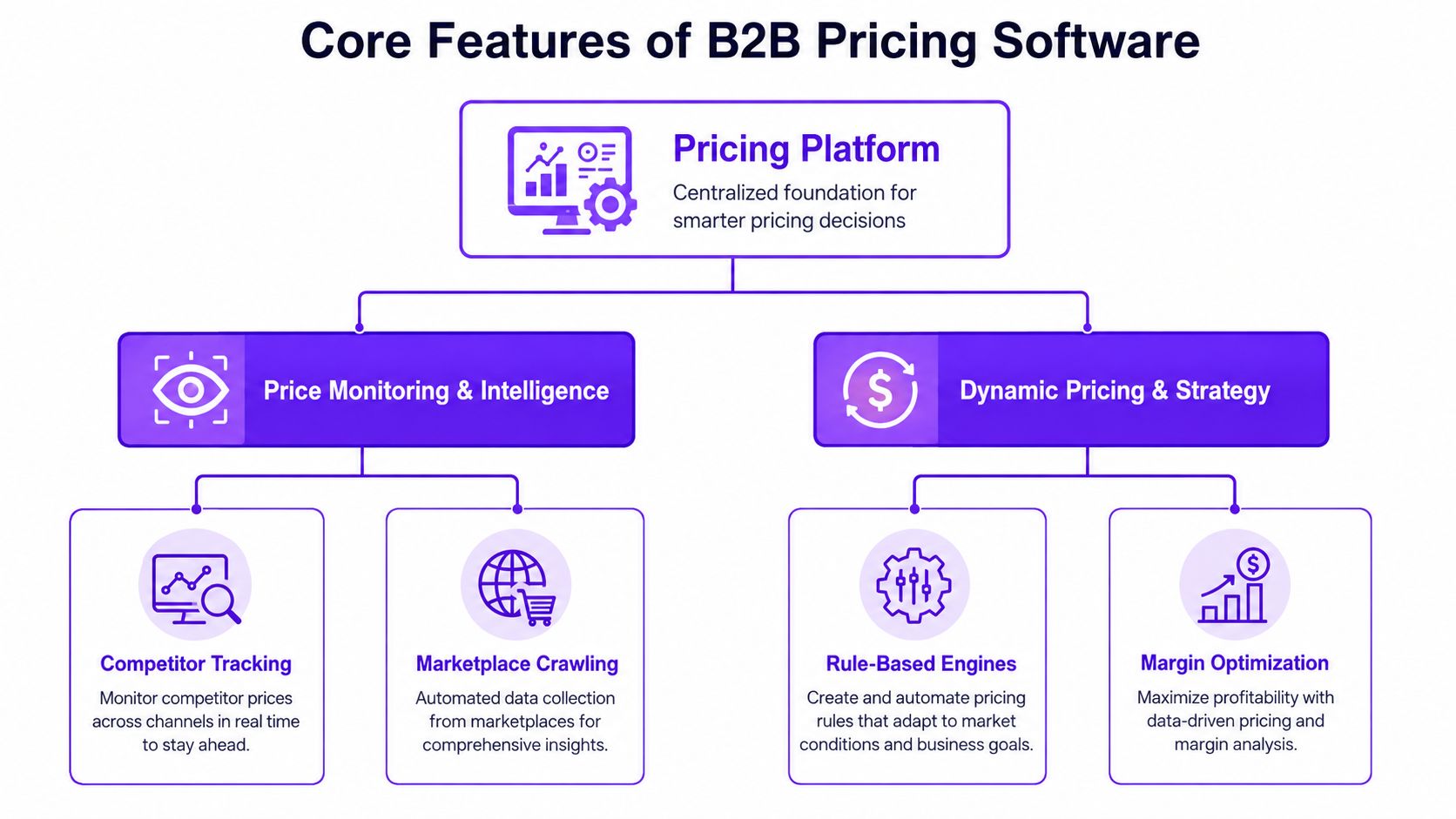
A useful platform connects market observation to an approved commercial action. Basic monitoring tools may show a competitor price. Stronger B2B pricing software helps a team determine whether the product match is valid, whether the change matters, what rule applies, who must approve a response, and where the new price should be executed.
Price monitoring and competitor tracking
The foundation is dependable data collection across the channels where products appear. A platform should crawl relevant marketplaces, retail sites, distributor portals, and brand or reseller pages, then normalize differences in titles, pack sizes, identifiers, currency, availability, and seller presentation.
Product matching deserves more scrutiny than a dashboard screenshot. A false match between a single unit and a case pack can trigger a bad repricing decision. A valid workflow should show the matched source, confidence or review status, observed price, stock state, timestamp, and channel.
MAP and RRP enforcement
MAP monitoring needs more than a red warning icon. It should detect violations, retain evidence, identify the reseller, and route the case through an enforcement workflow. RRP and MAP rules also need to be separated from actual transaction prices.
The FTC's analysis of a distributor MAP program distinguishes advertised prices from the reseller's freedom to choose the final resale price. That distinction matters in practice. A workflow should classify a public banner, marketplace listing, or in-store display separately from a checkout price, rather than treating every lower observed price as the same type of breach.
Dynamic pricing and optimization
Dynamic pricing can be rules-based, algorithmic, or both. A distributor might set a margin floor, a competitor-position rule, and an inventory condition. The engine can then propose a price adjustment while sending exceptions to a pricing manager instead of publishing every change automatically.
Pricing research software commonly combines Van Westendorp price sensitivity, Gabor-Granger analysis, conjoint optimization, and elasticity modeling to estimate willingness to pay and segment-specific response. Qualtrics' pricing research software overview explains how these methods support scenario analysis before a price change reaches the market.
Analytics and integration
Analytics should connect observed prices with internal outcomes. Useful views include margin by SKU and channel, price history, discount patterns, win and loss context, elasticity assumptions, and the effect of exceptions. A report that can't influence a pricebook, quote, approval, or ecommerce workflow is an observation layer, not a complete operating system.
Integration is what makes the parts useful together. ERP costs and inventory inform guardrails. CRM and quote data provide customer and deal context. Ecommerce platforms publish approved prices. A team researching pricing for Shopify stores may need a different execution path from an industrial sales organization, but both need consistent product data and clear ownership of the final decision. The pricing intelligence platform workflow should therefore connect monitoring, analysis, approval, and execution rather than leave each function in a separate application.
A practical distributor workflow looks like this:
- Detect: The system identifies a competitor flash sale on a matched SKU.
- Validate: It confirms the product, pack size, seller, stock status, and observed price.
- Simulate: The engine tests a response against the margin floor and channel rules.
- Approve: A pricing owner reviews the recommendation and supporting evidence.
- Execute: The approved value moves to the relevant pricebook, ecommerce channel, or quote workflow.
- Measure: The team records the commercial result and keeps the decision history for later analysis.
Business Benefits and ROI Drivers for B2B Organizations
The business case for pricing software shouldn't rest on a vendor's claim that an algorithm produces instant ROI. Leaders should connect the platform to specific sources of commercial value, then measure whether those sources improve after adoption.
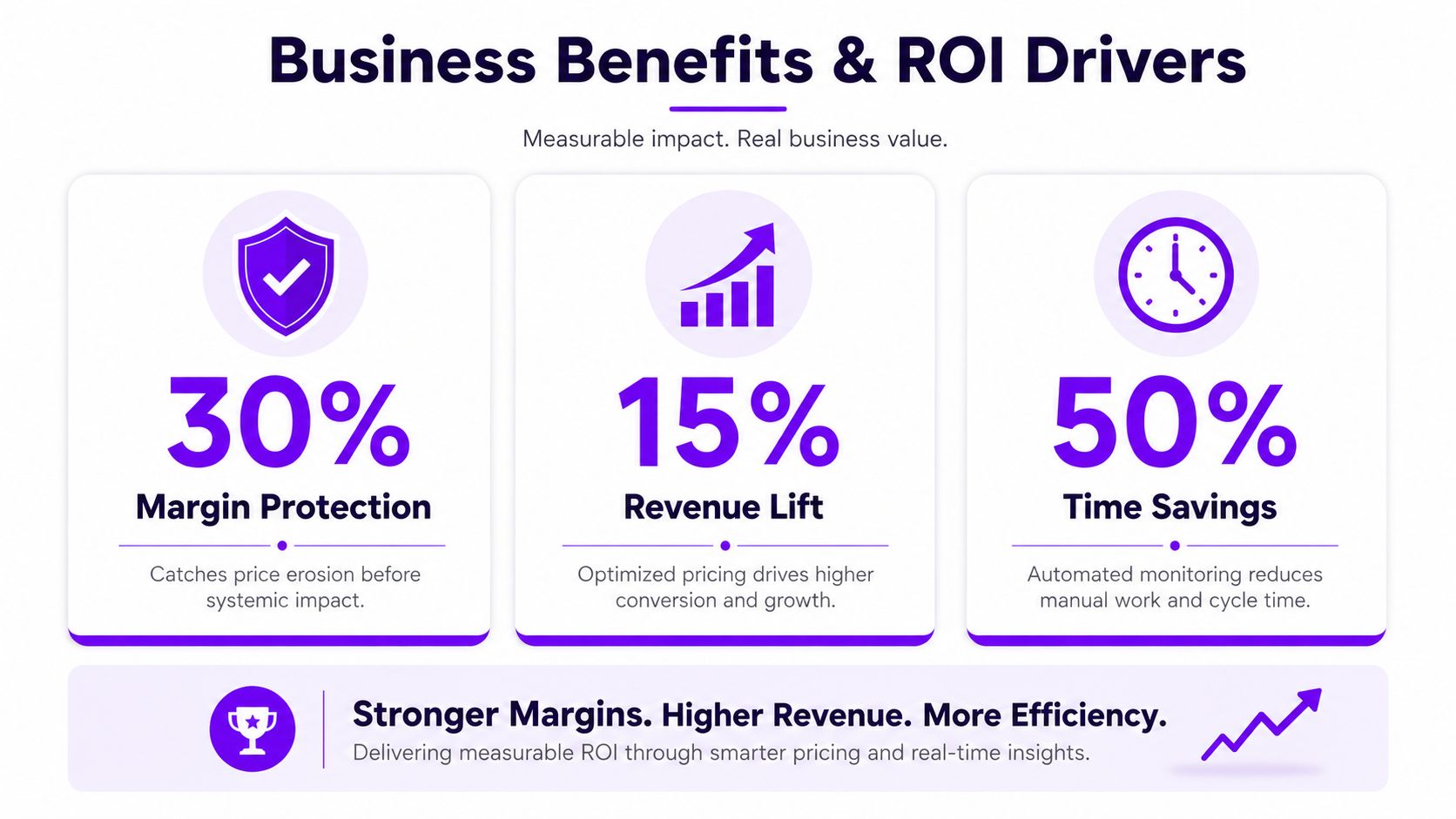
Margin protection
Price monitoring catches erosion while the team can still respond. A manufacturer can identify repeated advertised-price breaches before compliant resellers reduce their own investment in the brand. A distributor can see when an overlapping SKU is being quoted below an internal floor and investigate whether the cause is outdated cost data, an unauthorized discount, or a deliberate strategic exception.
The benefit is cumulative. Historical observations reveal whether a problem is a one-off promotion or a recurring pattern across a channel, category, or seller group. That record supports targeted action instead of broad price increases that punish compliant accounts.
Revenue optimization
Pricing software also helps teams find products that are priced too cautiously. Elasticity modeling, segment analysis, and quote outcomes can show where customers accept value that the current price doesn't capture. The right response may be a price increase, a revised bundle, a different service tier, or a tighter discount boundary.
The platform doesn't create willingness to pay. It helps teams see where their existing commercial data supports a more disciplined decision. That distinction matters because a recommendation without an explanation rarely survives a sales review.
Operational efficiency and channel control
Automation reduces repetitive research, but the more important gain is decision speed with context. A pricing manager can review a prioritized exception queue instead of checking every competitor page. Sales can receive current guardrails in the quote workflow instead of waiting for a pricing analyst to interpret a spreadsheet.
Channel management improves when every case follows the same standard. Evidence collection, violation classification, owner assignment, and escalation become repeatable. A compliant reseller can receive a clear explanation of the issue, while the brand avoids treating an ordinary transaction discount as an advertised-price violation.
For CFOs and founders, the ROI model should include:
- Recovered margin: Which products, accounts, or channels were leaking value?
- Avoided erosion: Which recurring issues were stopped before they spread?
- Decision capacity: How much analyst time moved from data collection to commercial analysis?
- Quote discipline: Did approval exceptions become more visible and easier to audit?
- Execution quality: Did approved changes reach the intended ERP, ecommerce, or quoting system?
A broader view of price optimization software helps place these benefits in context. The market is expanding, but adoption alone isn't proof of value. A platform earns its place when the organization can trace a recommendation from source data to approved action and then to a commercial result.
Real-World Use Cases Across B2B Roles and Industries
The same platform can serve different teams, but each role needs a distinct workflow. Start with the decision the team must make, not with the feature list.
Manufacturers and brand owners
Problem: Resellers publish products below a brand's advertised-price policy, and the manufacturer receives incomplete evidence.
Workflow:
- Match the brand's SKUs across Amazon, eBay, independent ecommerce sites, and distributor pages.
- Capture the advertised price, seller identity, URL, availability, and timestamp.
- Classify the event as an advertised-price issue or a transaction-price observation.
- Apply the relevant rule and route the case to channel management.
- Export or share the evidence with the reseller and record the resolution.
MAP policies commonly restrict the advertised price rather than the actual resale price. An FTC-reviewed Enerpac example used a rule prohibiting advertising more than 15% below the current resale list price in the United States and Canada, as described in the FTC's MAP policy materials. The operational outcome is a cleaner enforcement queue, not an automatic accusation against every seller offering a lower checkout price.
Distributors and wholesalers
Problem: Sales teams quote from internal lists while competitors change public prices, creating uncertainty around competitive position.
The distributor tracks matched competitor SKUs, availability, pack configuration, and channel. Before responding to a quote request, the salesperson or pricing manager can review whether the offer is above, aligned with, or below the relevant market reference. If a competitor is overpriced, procurement can investigate a sourcing opportunity. If the market is under pressure, the team can decide whether to adjust, hold, bundle, or explain the value difference.
The outcome is a quote supported by current evidence rather than an automatic race to the lowest visible number.
Ecommerce managers and online retailers
Problem: An online store needs to react to competitor moves without sacrificing its margin floor.
A rules engine can combine competitor position, stock status, internal margin boundaries, and approval requirements. A price may change automatically within approved limits, while a larger movement waits for review. Marketplace monitoring is especially important because a product can be available, suppressed, bundled, or sold by multiple sellers under similar titles.
The manager should measure whether the workflow reduces stale prices and improves consistency across channels. A repricing event without product matching and stock validation can create more errors than it removes.
Pricing and category managers
Problem: A proposed price increase or promotion lacks a credible commercial case.
The manager uses historical prices, transaction outcomes, competitor movements, segment behavior, and elasticity assumptions to model scenarios. The analysis can separate a category-wide shift from a product-specific issue and show where a promotion may just subsidize customers who would have purchased anyway.
The deliverable isn't just a recommended number. It should include the affected products, rationale, assumptions, guardrails, approval owner, and measurement plan. That documentation gives sales and finance a shared basis for discussion.
Evaluation Criteria for Choosing the Right Pricing Platform
Feature counts make vendor comparisons harder, not easier. A platform that excels at marketplace crawling may be a poor fit for negotiated enterprise quotes. An advanced optimization engine may produce little value if product data, costs, and approval ownership remain inconsistent.
Compare the data before the interface
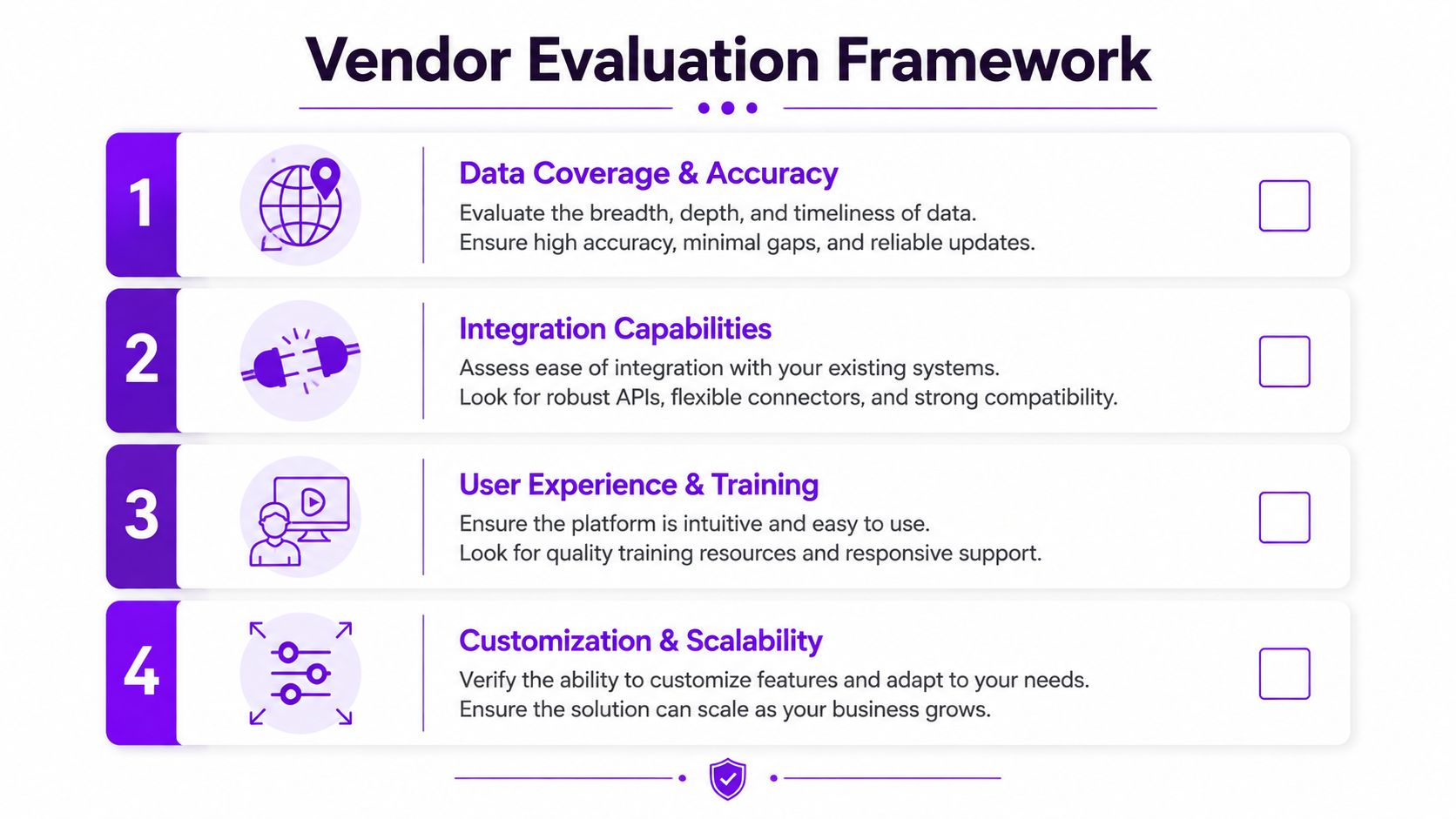
Ask which marketplaces, retail sites, distributor portals, countries, and product formats the platform monitors. Then test matching on difficult catalog examples, including variant names, multipacks, private-label equivalents, missing identifiers, and products with changing availability.
Data freshness should match the decision. A weekly view may suit strategic category analysis, while a channel enforcement workflow may need much more frequent collection. Don't accept a generic coverage statement. Request sample records and ask how the platform handles blocked pages, missing values, seller changes, and discontinued items.
Assess the commercial model
Pricing may be based on SKUs, users, tracked URLs, competitors, usage volume, or a broader subscription. Model the cost of adding products and channels, not just the initial quote. The right structure depends on whether you need a focused pilot, a broad monitoring program, or a quote-centric deployment.
Market Edge is one example of a usage-based approach. It monitors competitor pricing and stock across resellers, retail sites, and marketplaces including Amazon, eBay, and eMAG, with pricing estimated per tracked URL. That should be treated as an example to compare, not as a substitute for evaluating your own coverage and workflow requirements.
Test governance and integration
A recommendation must show its reasoning. Look for:
- Explainable inputs: Can users see the competitor observation, cost, margin floor, rule, and scenario behind a proposed price?
- Human control: Can authorized users approve, reject, amend, or defer a recommendation?
- Audit history: Does the system record who changed a rule, who approved an exception, and what evidence supported the action?
- Workflow connectivity: Can the platform connect with ERP, CRM, ecommerce, CPQ, pricebook, and quote management systems?
- Data portability: Are API access, exports, and historical records available for analysis and governance?
The competitive intelligence platform evaluation guide is useful as a starting point, but the strongest test is a live workflow using your own products and approval rules.
Finally, assess implementation and support. Ask who cleans data, configures rules, trains sales, handles matching disputes, and supports future channel additions. A technically capable product can still fail if no one owns the operating model after launch.
Implementation Best Practices and Common Pitfalls to Avoid
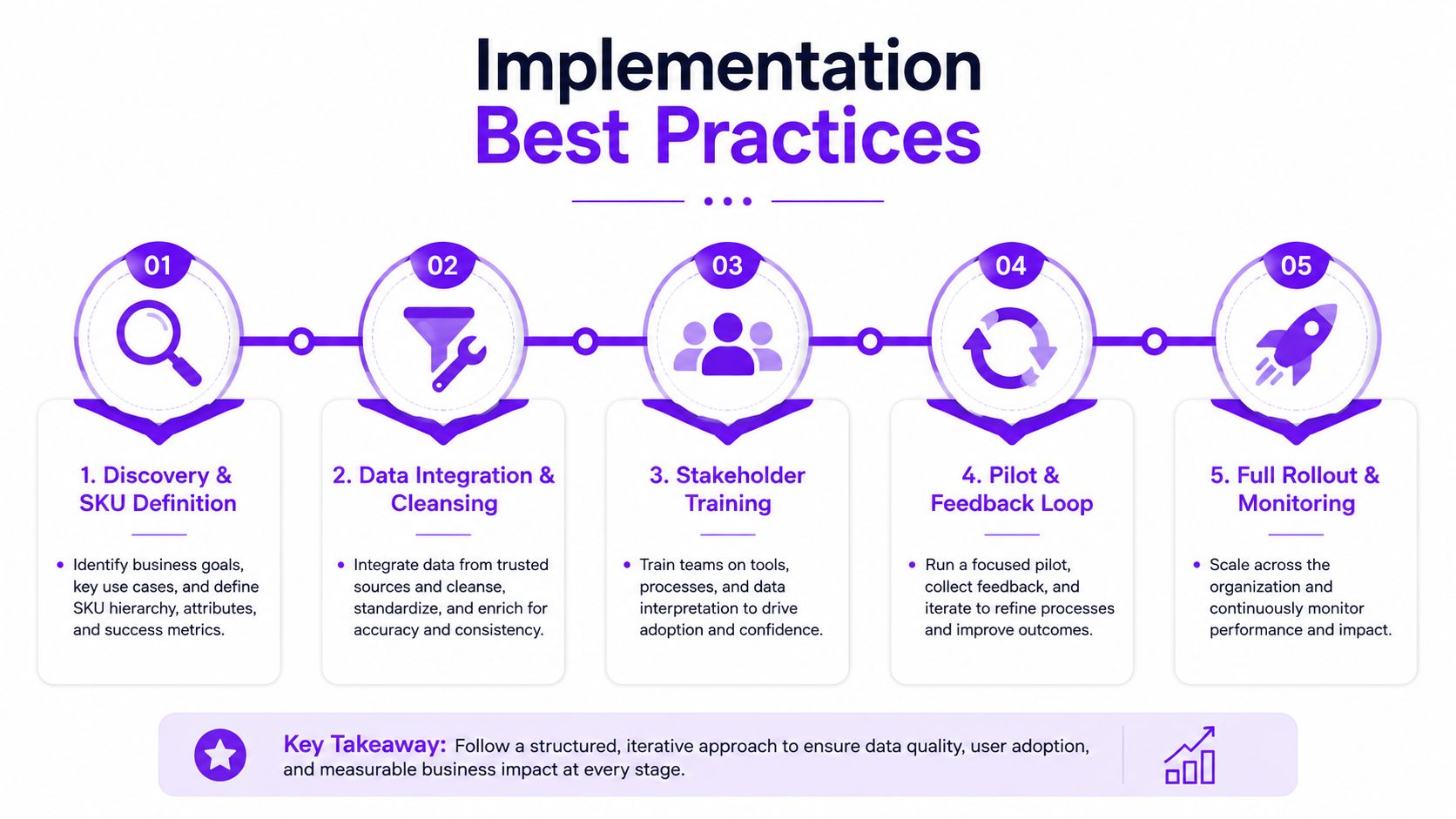
Successful deployments begin with a narrow commercial problem. Teams that try to monitor every product, reseller, and region immediately usually create a noisy alert stream before they've agreed on what constitutes an actionable event.
Start with a controlled scope
Select high-impact SKUs, the channels that influence your revenue, and competitors that sales already watches. Establish baseline prices, costs, stock states, product matches, MAP or RRP rules, and current approval paths. This gives the team a reference point for testing accuracy.
Don't skip the baseline because it feels administrative. Without it, nobody can tell whether an alert reflects a genuine market change or a bad match.
Connect systems before adding automation
Bring in ERP cost and inventory data, CRM or quote context, and ecommerce or pricebook outputs. Test the full path with controlled records. Confirm that a price recommendation preserves the right product, currency, customer rule, channel condition, and approval status when it moves between systems.
A dashboard that sits beside the commercial workflow often becomes another data silo. Integration is what turns an observation into an executable decision.
Design governance with the people who use it
Define who owns rules, who approves price changes, who handles reseller cases, and who can override a recommendation. Give sales teams the context behind guardrails before asking them to follow them. If a rep sees only a blocked discount and not the competitive evidence or customer economics, resistance is predictable.
Run a pilot, collect false positives, tune matching and thresholds, then expand. Early wins might include a cleaner competitor view, a faster MAP investigation, or fewer manual checks. The team should measure those outcomes without promising unsupported financial lifts.
Common pitfalls include:
- Monitoring too broadly: Begin with high-value products and expand after alert quality is proven.
- Ignoring data quality: Clean identifiers, pack information, costs, and channel mappings before trusting recommendations.
- Leaving sales out: Involve sales in rule design and show how the workflow supports negotiation.
- Automating approval away: Keep human review for exceptional, high-risk, or strategically important decisions.
- Failing to assign ownership: Every alert and exception needs a named business owner.
Value usually appears in stages. The first stage is visibility, followed by trusted workflows, then broader pricing discipline. The timeline depends on data readiness, integration complexity, and adoption, so treat implementation as an operating change rather than a software installation.
How Pricing Software Fits Into Your Broader Commercial Strategy
Pricing software earns a strategic role when teams connect price decisions to product, sales, finance, and market-entry choices. Product leaders can compare competitor position with margin, demand, inventory, and quote outcomes to identify items for promotion, repositioning, bundling, or retirement.
Sales leaders need usable evidence, not an opaque score. A representative should see why a recommended range exists, which competitive observation supports it, what value difference supports a premium, and which exceptions require approval. That context can replace reflexive discounting with a negotiation story the customer can understand.
Structured price intelligence also supports expansion into new regions or channels. Teams can review local competitor positions, availability patterns, reseller behavior, currency effects, packaging, services, and channel economics before setting commercial assumptions. The analysis does not remove market-entry risk, but it makes those assumptions visible and easier to challenge.
Pricing consistency strengthens customer relationships. Strategic accounts may still receive negotiated terms, while governance helps distinguish an intentional value-based agreement from accidental discount drift. Finance can reconcile what was approved, what was quoted, and what was ultimately executed.
The commercial model itself is changing. B2B software pricing is moving beyond traditional seat-based structures toward hybrid, usage-based, agent-based, and outcome-oriented models, according to BCG's analysis of B2B software pricing in the AI era. The same analysis reports that flat-fee subscriptions declined from 29% to 22%, seat-based pricing from 21% to 15%, and hybrid pricing rose from 27% to 41% over the prior twelve months.
As pricing models become harder to explain, governance becomes more important. Buyers need human-in-the-loop controls, visible logic, scenario simulation, and approval workflows before applying recommendations across subscriptions, usage, rebates, packaging, and quotes. The IDC MarketScape summary discussed by Simon-Kucher highlights governance and “glass box” pricing engines as teams move beyond spreadsheet-led processes.
Monitoring tools such as Market Edge provide market evidence and channel visibility for this operating model. They can support the shift from manual checks to governed price intelligence while ERP, CRM, ecommerce, and quote workflows remain connected to daily execution.
Market Edge helps distributors, manufacturers, importers, and online retailers monitor competitor prices and stock across resellers, retail sites, Amazon, eBay, and eMAG, with product matching and alerts for selected SKUs. Visit Market Edge to review the monitoring workflow and assess its fit for price intelligence, MAP enforcement, or competitive tracking.